Internal application
Aquila workflow monitoring
An internal platform for task workflows, quality review, and AI training-data delivery, co-developed with the Eagle Point AI team.
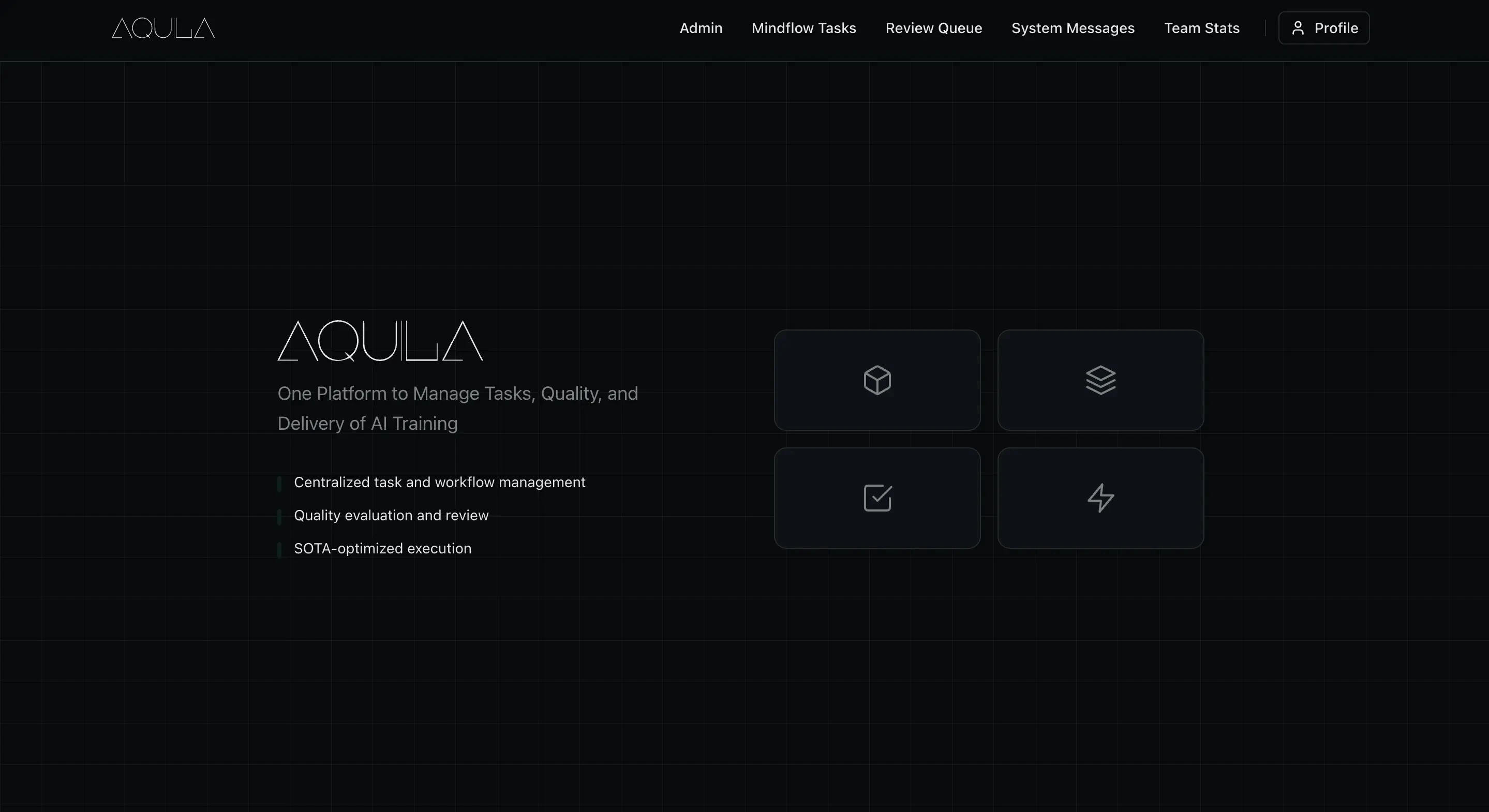
Aquila interface screenshot supplied by Dawit.
01 · My contribution
I co-developed Aquila, contributing code and product design before its internal deployment. I translated operational and client requirements into workflows and supported adoption across an operations team that grew to around 40 people.
02 · The problem & the people
Eagle Point AI’s training-data operations needed visibility into project progress and performance. Aquila was developed as an internal workflow monitoring tool for the operations team.
The useful engineering context is the connection between the workflow and its users: delivery requirements had to become something staff could follow and managers could monitor.
03 · My development contribution
- Contributed to the product design and code as part of the team developing Aquila.
- Translated operational and client requirements into clear workflows.
- Supported internal deployment and adoption for project and performance visibility.
04 · AI operations & evaluation context
In the same role, I directed dataset collection operations and analyzed incoming client projects to define scope and delivery requirements. Eagle Point AI works in AI training data and evaluation; my documented contribution is dataset operations and project intake.
05 · The interface
The supplied screenshot presents Aquila as a platform for managing tasks, quality, and delivery of AI training. Its navigation includes Admin, Mindflow Tasks, Review Queue, System Messages, Team Stats, and Profile. These are visible interface entry points; the screenshot does not identify its implementation stack.
Verified tools & methods
- Implementation stack not yet documented
Related links & evidence
Code and product-design contribution, internal deployment, and team context come from the existing CV and Dawit’s account. The interface screenshot was supplied by Dawit. The implementation stack and individual module ownership have not been provided.